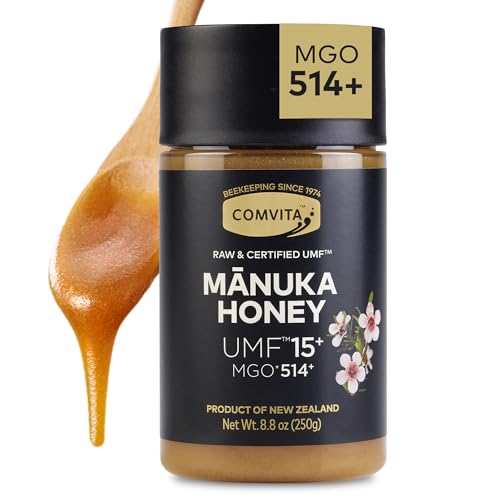
A jar of Manuka honey can cost $30, $50, even $100+. Regular honey is $8. So what exactly are you paying for, and is it actually worth it?
The short answer: it depends entirely on what you want it for. Here's what the science says and what the marketing leaves out.
What makes manuka different
All honey has some antibacterial properties, mostly from hydrogen peroxide produced by an enzyme bees add during production. Manuka honey has an extra layer: methylglyoxal (MGO), a compound that comes from the Manuka bush (Leptospermum scoparium) native to New Zealand.
MGO gives Manuka its "non-peroxide antibacterial activity." That's the fancy way of saying it fights bacteria through a mechanism that other honeys don't have. This is real, well-documented science. It's not marketing.
Umf ratings explained
UMF stands for Unique Manuka Factor. It's a grading system that tests for MGO, DHA (a precursor to MGO), and leptosperin (a marker confirming the honey came from Manuka flowers). The higher the number, the more potent the honey.
UMF 5+ is entry-level. Good for eating, minimal therapeutic value. UMF 10+ is the sweet spot for daily wellness use. UMF 15+ is where real antimicrobial activity kicks in. UMF 20+ and above is medical-grade territory. You'll also see MGO ratings. MGO 100 roughly equals UMF 5. MGO 250 is about UMF 10. MGO 400 is about UMF 13. MGO 550+ is UMF 15+.
What science actually supports
Wound healing is the strongest evidence. Medical-grade Manuka honey is used in hospitals for burns, diabetic ulcers, and surgical wounds. This is FDA-cleared (Medihoney) and backed by solid clinical data.
Sore throat and oral health have decent support. Several studies show Manuka reduces bacteria linked to gingivitis and sore throats. It won't cure strep, but it's more than a folk remedy.
Digestive health has promising but limited evidence. Some studies suggest Manuka may inhibit H. pylori (the bacteria behind many stomach ulcers), but the research is still early and mostly in vitro.
Skincare benefits are real but not unique. Manuka's antibacterial and anti-inflammatory properties help with acne and general skin health. But a good raw honey does many of the same things for a fraction of the price.
What's marketing
"Superfood" claims. Manuka honey is still sugar. It's not a meal replacement, not a weight loss tool, and not a substitute for actual medical treatment. The calories and sugar content are nearly identical to regular honey.
Immune-boosting claims. Your immune system doesn't work like that. No single food "boosts" immunity in any clinically meaningful way.
How to spot fakes
This is a real problem. More Manuka honey is sold globally each year than New Zealand actually produces. Here's how to protect yourself:
Look for the UMF trademark with a license number. Verify it at umf.org.nz. Check for a New Zealand fern mark on the label. Be suspicious of unusually low prices. Real UMF 15+ shouldn't cost $20. Buy from brands with third-party lab testing and published results.
When regular honey works fine
For cooking and baking, regular honey is identical. For general sweetening, Manuka is a waste of money. For basic skin hydration masks, raw honey from any source works well. The humectant properties don't depend on MGO.
For sore throats, regular honey performs surprisingly well in studies. Manuka has an edge, but not a massive one for this use case.
The bottom line
Manuka honey is a legitimate product with real, science-backed properties. It's not a scam. But it's also not a miracle. If you want it for wound care, oral health, or as a potent topical treatment, UMF 15+ is worth the investment. If you want honey for your tea, save your money and buy local.